Lago AngosturaThe strange creatures in a drop of bog water reveal the hidden infrastructure of life on Earth. Part 4 of 5 of Turrialba Volcano and the Infrastructure of Everything.
If you’ve made it this far in the series, I’d love to know — what do you hope the final chapter will answer? You can also read on Notes from the Road with high resolution images. For reasons that are now lost to time, my parents bought me a compound microscope when I was a pre-teen. It was heavy and serious enough looking that it would have put university and doctor’s-office microscopes to shame. On the rare occasions when the motivation struck, I would grab a red Solo cup from the kitchen cabinet and a Tupperware container with an avocado green lid, and I would walk to the neighborhood’s floating peat bog; a ring of water with a wet floating island of sphagnum moss, bog ferns and horsetails. The only access point was through a thin layer of poison ivy, but I was so accustomed to getting it that I invented a technique using an index card to scrape the oil from my skin. At the edge of the bog, I would collect my sample of swampy water and rush home, placing the duckweed-filled Tupperware beside my microscope and putting a drop on the glass slide, then lowering the coverslip over it.
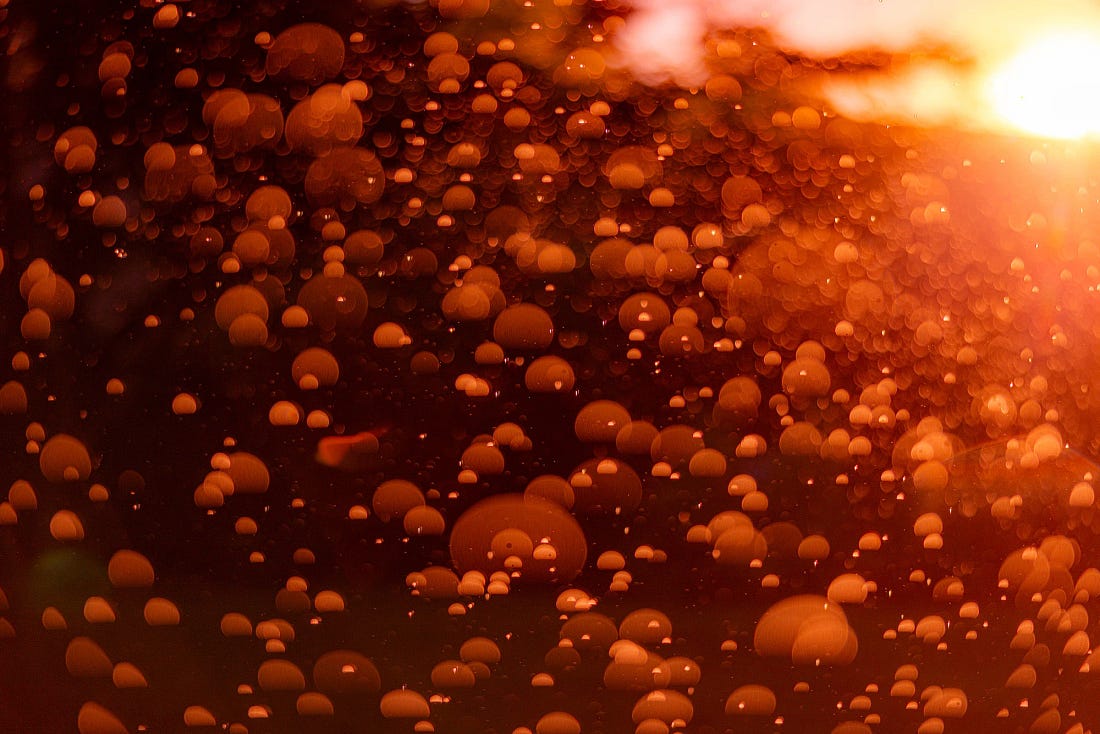
The next part was the hard part. I would turn the microscope’s light on and force myself to look. I already knew, from experience, the horror I was about to see. I would turn the focus dial, and try to keep from cringing as the world came into focus. Creatures slid across the glass with no recognizable anatomy. Some looked like clear sacks with whipping tails. One looked like an organic comma, flexing its body violently before disappearing off the slide. Another drifted into focus, looking like a translucent slipper. The hairs on its body vibrated so fast that they were just a blur of silver blue. It calmly glided through the water, sweeping tiny dots from the ether into a groove built on its side. Maybe someday it will inspire a new vacuum design? Another lurched past like a swollen drop of jelly, its edges constantly changing shape. Arms of gelatinous flesh extended and retracted without warning, reaching, dissolving, reforming. It swallowed things whole. A speck would drift too close and vanish into the body, digested without ceremony. Some creatures were pure geometry. Tiny green rods spun like drill bits. Long threads of algae stretched across the slide like cables, while chains of perfect spheres clung together like strings of glass beads. Others were built like monsters. I remember the ones that looked like armored beetles, with rotating wheels of bristles that spun around their mouth. And I remember creatures with hinged jaws. The one that unsettled me most might have been the creature with a crown of clawed arms that opened like a mechanical flower, chomping away at anything that passed. There was nothing peaceful about staring into that microscope. It was crowded in a way that made you question water. It was predatory and ancient. A world of scavengers and hunters. Creatures that have stalked and killed and swallowed prey whole for millions of years. Every time I looked down that eyepiece, one thought kept coming back: Damn, all of this had been sitting there the whole time. Invisible.
I avoided horror films at this age. I wouldn’t even watch Creature from the Black Lagoon. But looking through this microscope haunted me in a different way. Invisible does not mean insignificant. Invisible is foundational. What I saw on the slide holds forests upright. It underpins human civilization. These organisms—too small to see—make up much of the living world. They are the building blocks of the biosphere, the way a cathedral is built of stone. When scientists finally tallied up the total weight of life on Earth—all that living carbon—they came to this mind-blowing realization: most of it is microscopic. From a biomass perspective, plants still take the biggest slice, around 450 billion tons of carbon worth. But right behind them? The stuff you can’t even see. Bacteria alone account for about 70 billion tons of living carbon. Every bird, fish and whale. Every insect, reptile and amphibian. Every beetle, every human, every cow and horse add up to only about 2 billion tons of carbon. Bacteria outweigh the animal kingdom by more than 30 to 1. That makes humans a rounding error. All eight billion of us together amount to about 60 million tons of carbon. Bacteria outweigh humans by about a thousand to one. But hold on. Bacteria? They’re only a piece of it. Archaea look bacterial, sure, but they’re a whole other branch. They dwell in boiling vents. Salt flats. Deep rock pores and fractures—extremes where life just shouldn’t work at all. Oceans are loaded with invisible life too. Trillions of plankton drifting in the sunlit water, feeding everything else below. Diatoms. Dinoflagellates. And those coccolithophores again—the ones we discussed in the beginning of these notes, building calcium shells, quietly messing with ocean chemistry, steadying the climate in ways we barely understand. Some of the most abundant organisms on Earth belong to this invisible world of plankton. It was not until 1986 that scientists discovered something so small that it had been hidden from them all along. They discovered Prochlorococcus, a cyanobacterium that may be the single most abundant photosynthesizer anywhere on the planet. A drop of seawater can easily hold tens of thousands of its cells. But those creatures from my bog-water slides? Totally different branch of life. Protists: lone single-celled predators chowing down on bacteria and algae, the ones that keep microbial populations in rough balance. Don’t overlook the microscopic fungi and the other little decomposers either—they’re just steadily munching through dead organisms, feeding nutrients right back into the dirt and streams. All these tiny, invisible things combined? They form a massive part of Earth’s total living matter. They are also staggeringly diverse. Scientists have named about two million species of life on Earth. That includes plants, animals, fungi and all these microbes we are talking about now. You often hear that biologists recognize that there may be closer to ten million species on Earth. But microbes change the scale of that conversation entirely. Recent genetic studies are hinting at a game changer for diversity in life. There may be as many as one trillion microbe species on Earth. A trillion.
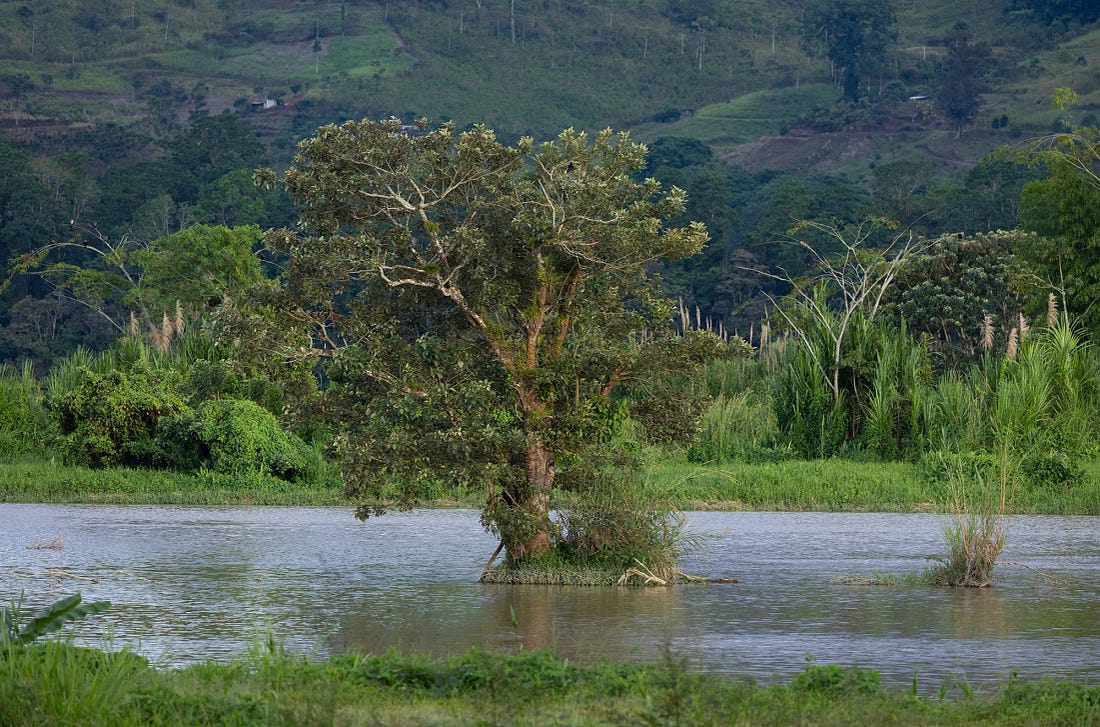
For most of scientific history, microbiologists could identify microbes only by growing them in laboratory cultures. The problem was that nearly ninety-nine percent of microbial species refuse to grow under laboratory conditions. They live only within the complex chemical and ecological relationships of the environments they evolved in. The microbial world has largely been invisible to science until only very recently. You could even say that our understanding of the diversity and structural importance of this hidden biosphere is being unraveled only now. What those surveys revealed was staggering. Most of Earth’s biological diversity is microscopic. And most of it remains unnamed. That creates a strange likelihood. Species are disappearing before science knows they even existed. A drained wetland. A plowed grassland. A coral reef that bleaches and dies. Each may erase microbial lineages that evolved over millions of years — entire branches of the tree of life vanishing silently. This is sometimes called dark extinction. We are losing species we have never even discovered. But biodiversity is not only about species. It is also about genes and ecosystems. To us laymen, we often think about biodiversity from the perspective of species. We think of frogs, orchids, beetles and birds. That is almost always how biodiversity is presented to us in nature documentaries and science journalism. Beneath that lies genetic diversity, the subtle variations inside species that allow populations to adapt, evolve, and survive change. And then there is a third level. The diversity of ecosystems themselves. Ecosystems…rivers and streams, temperate forests, deserts, grasslands or tundra…are living structures of climate, water, soil, geology and the makeup of biological relationships that decide what can exist there. Change the structure, and the life within it changes. Destroy it, and the web of relationships collapses. Costa Rica makes this idea unusually visible. Even with a journey of relatively low mileage, there is an extraordinary range of climate and elevations, all compressed down into the smallest space. At the top of Turrialba Volcano were the summit barrens, the cloud forest canopy, the montane understory. We scanned for birds in elfin forests and montane forest streams. We witnessed secondary forest and riparian forest, pastures and cattle grasslands. Up there, just a few days ago, I wore a hat and jacket. As we descend from 11,000 feet to below 3000 feet, the air has turned densely humid, warm and lovely. Each change creates a different ecosystem. Driving down toward Lago Angostura, that idea becomes visible everywhere around us. The lower down we go, the more the vegetation changes. The trees are taller. The understory is thicker. Rivers and streams are everywhere, flowing more slowly. Lago Angostura, a reservoir created by a dam, is ringed by low mountains and patchworks of farmland, sugarcane and scattered pastures. It collects water, nutrients and sediments from an enormous watershed. Here there are open freshwater lake ecosystems, reservoir mudflats, riparian forest, river-delta wetlands, marshes, oxbow ponds, and bamboo thickets. Around us are cloud forests and lowland forests. Forest. Wetland. River. Lake. Each is its own ecosystem. But here they touch one another. These places are where ecosystems overlap; where the boundaries of forest, lake, and mountain come together. And this is where biodiversity concentrates. Species designed to thrive in one ecosystem interact with others.
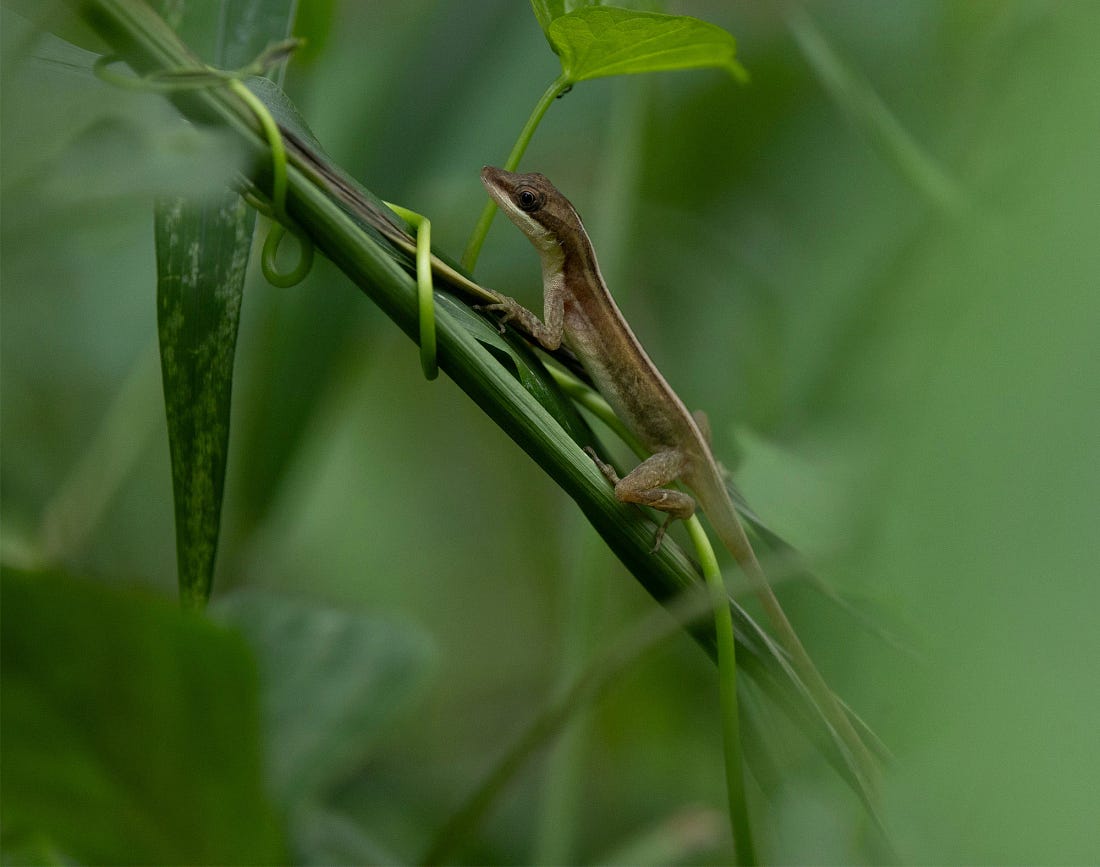
Harry and I get out of the car and start walking down the dirt road that winds for miles along the reservoir. We are looking out at that mix of aquatic ecosystems, and the diversity is astounding. Black-bellied Whistling Ducks, Purple Gallinules, Southern Lapwings and Northern Jacanas. A Snail Kite, one of the most specialized birds on Earth, glides just a few feet above the marsh. Its entire body seems built for one task: to pluck apple snails from the marsh. Harry spots an Olive-crowned Yellowthroat along the water’s edge, and when he says, “Look at that classic woodland camouflage above. It makes that patch of yellow so luminous. The color of fresh buttercups!”, it reminds me of the conversation we had yesterday. Harry is one of the most respected birding guides in Central America, guiding serious listers and ornithologists from around the world. People often call him a walking encyclopedia, not just of birds, but plants, butterflies, spiders. Harry also speaks with admiration about his wife Mercedes, who is herself one of the most accomplished bird guides in the region — notable in a field where female guides are still rare. Harry had told me about the differences in his and Mercedes’ strengths as birders. “Her ability to mimic birds is extraordinary,” he told me. “I can mimic a Keel-billed Toucan.” He barks like a frog. “Croo-ark! Croo-ark! Rok-rok-rok-rok-rok!” “But when she does the mimic, it is absolutely identical to the toucan!” One of the first things you learn in birding is that no two people notice the same world in quite the same way. One hears calls. Another catches movement. Another somehow sees the one bird everyone else missed. That variation in skill is only a metaphor, of course, but it points toward a deeper truth. Diversity matters within species too. Snail Kites, yellowthroats, even the microbes in the marsh all depend on genetic variation within their own populations if they are going to adapt and persist. The dirt road passes through massive trees, and an understory rich with lizards and beetles. Every quarter-mile, we pass through a seam, into a new ecosystem. These seams between ecosystems are often among the richest biological zones on Earth. But here’s the thing. These ecosystems are disappearing around the world. Coral reefs—among the most elaborate things evolution ever cooked up—are bleaching, dying off fast as oceans warm and acidify. The Amazon? Massive areas cleared, degraded—pushing that biodiversity powerhouse right to the brink of tipping points. Forests are drying up everywhere, flipping to grassland or scrub with the shifting climate. Wetlands, those old river-valley and coastal sprawls—drained on a staggering scale for crops and development. Even deserts are expanding. Across large portions of the world, landscapes are becoming simpler. Forests become cropland. Wetlands become dry fields. Diverse ecosystems? They’re collapsing into fewer types, everywhere you look. When ecosystems vanish—species go with it. Invisible microbes too. We talk biodiversity loss like it’s just species disappearing. But the real damage runs deeper: ecosystems themselves—the living systems that hold species diversity together—we are losing those too. Lose genetic diversity, you lose species. Lose ecosystems, you lose genetic diversity. Lose species, you lose genetic diversity and ecosystems. Standing on that muggy shoreline at Lago Angostura, it’s obvious. These things aren’t simple machines. They behave more like living systems of relationships.
Biologists have been trying to understand those relationships for decades, and some of the most revealing experiments began far from Costa Rica, in a patch of prairie not far from where I was frightened by a drop of water in Minnesota. At the Cedar Creek Ecosystem Science Reserve, north of Minneapolis, ecologist David Tilman spent years doing something that sounds deceptively simple. He planted fields. But instead of sowing the same mixture everywhere, Tilman carefully controlled how many species grew in each plot. Some plots held only a single species of grass. Others contained mixtures — four species, eight species, sixteen species, sometimes more. Then he waited. Over time the differences became unmistakable. The plots with only one species behaved like fragile monocultures. When drought arrived, productivity collapsed. When insects or disease appeared, entire plots struggled. The more diverse plots behaved differently. When drought struck Tilman’s fields, some species suffered — but others thrived. Plants with deeper roots were drawing moisture from far below the surface. Species adapted to dry conditions expanded into the gaps left by those that faltered. The ecosystem adjusted. The more species present, the more stable the system became. After years of measurement, Tilman and his colleagues found that the most diverse prairie plots produced dramatically more biomass, stored more carbon, and recovered more quickly from disturbances than monocultures. Diversity was not decoration. It was structure. Decades earlier, on Washington’s rocky coast, another experiment laid bare how fragile the whole setup could be. Robert Paine was studying tidal pools, those shallow basins that the retreating tide leaves scattered across the rocks. These are crowded little worlds of life: mussels, barnacles, algae, snails, limpets, tiny fish and crabs. Among these creatures was a large starfish — the Ochre Starfish. Paine had to ask himself: what if it disappeared? So he began removing them. One by one he pried them off. Tossed the starfish far out to sea. The fallout was immediate. Brutal. Without a predator, the mussels spread, smothered everything: barnacles, algae, everything. A few years later, that teeming pool was stripped down — a wasteland in miniature. One species. One predator. Holding it all together. Paine called them keystone species—which he borrowed from architecture. Lose the keystone, the arch collapses. Ecologists started paying attention: ecosystems aren’t just species thrown together. They’re relationships. Predation. Competition. Cooperation. Adaptation. All in fragile balance. These days, people are studying those connections on huge scales. Tropical Ecologist Gretchen Daily keeps asking a big picture question: What do ecosystems actually do for us? We used to see forests, wetlands, grasslands as scenery. Nice to look at. Easy to clear if we needed the space for farms or cities or whatever. Daily suspected the opposite. She hypothesized that ecosystems were doing crucial work we all rely on. So Daily and her team started measuring it. Here in Costa Rica, her coffee farm studies turned up a surprise: farms that hugged intact forest had much better yields than coffee farms adjacent to cleared land. The reason? Bees from the forest edges pollinated everything. More beans, higher quality beans. The forest wasn’t just scenery—it was part of the production line. As Daily continued her fieldwork across diverse systems, she and her colleagues learned that it’s the same story everywhere else. Wetlands swallow floodwaters before they hit towns. Forested watersheds purify water better than engineered plants. Mangroves dampen storm surges, shielding coastal communities. Daily’s group started calling this ecosystem services. Bottom line: nature is at work. Forests regulate climate and water. Microbe-rich soils hold nutrients for crops. Pollinators keep agriculture alive. Ocean plankton fine-tune the atmosphere. Human civilization rests on top of these biological systems the way cities rest on roads and power grids. Except these systems were not designed. They evolved. Over billions of years, life assembled networks of species whose interactions stabilized the planet. Biodiversity is the architecture of those networks. It is what makes ecosystems resilient. But the same experiments that revealed the power of biodiversity revealed something else as well. Remove enough species and the structure begins to weaken. Sometimes gradually. Sometimes suddenly. Standing beside Lago Angostura, the valley looks full of life. Cloud forest above us. Montane forest on the slopes. Rivers descending through the valley. Wetlands spreading along the lake’s edge. Each ecosystem feeding the next. Each one supporting its own web of life. But the science that Tilman and Paine uncovered carries an uncomfortable implication. The stability of these systems depends on diversity. And across much of the planet, that diversity is beginning to disappear. The valley around Lago Angostura is alive this late afternoon. Dragonflies skim the water. Frogs call from beyond. Insects hum in the reeds. For now the machinery of this ecosystem is still running. But the science suggests something unsettling. When biodiversity begins to unravel, ecosystems do not simply grow quieter. They begin to fail. This is Part 4 of 5. The final chapter will appear in two weeks. Notes from the Road is free today. But if you enjoyed this post, you can tell Notes from the Road that their writing is valuable by pledging a future subscription. You won't be charged unless they enable payments.
|