The Pupfish Wars of Death ValleyLake Manly rises again, and the fight over a one-inch fish returns. Part I of III.
I first wrote this story 28 years ago. What follows is a complete revision, expanded and reshaped into a three-part series. If you prefer to read it all at once, the full story is available here.
Why not kill the pupfish? People have asked for it. Some even risked their lives over it. They’d had enough of this one-inch swimming mongrel. I first started thinking about that question at Salt Creek in 1998, after seeing fading ‘Kill the Pupfish’ bumper stickers on old desert trucks. At the time, the words didn’t mean much to me.
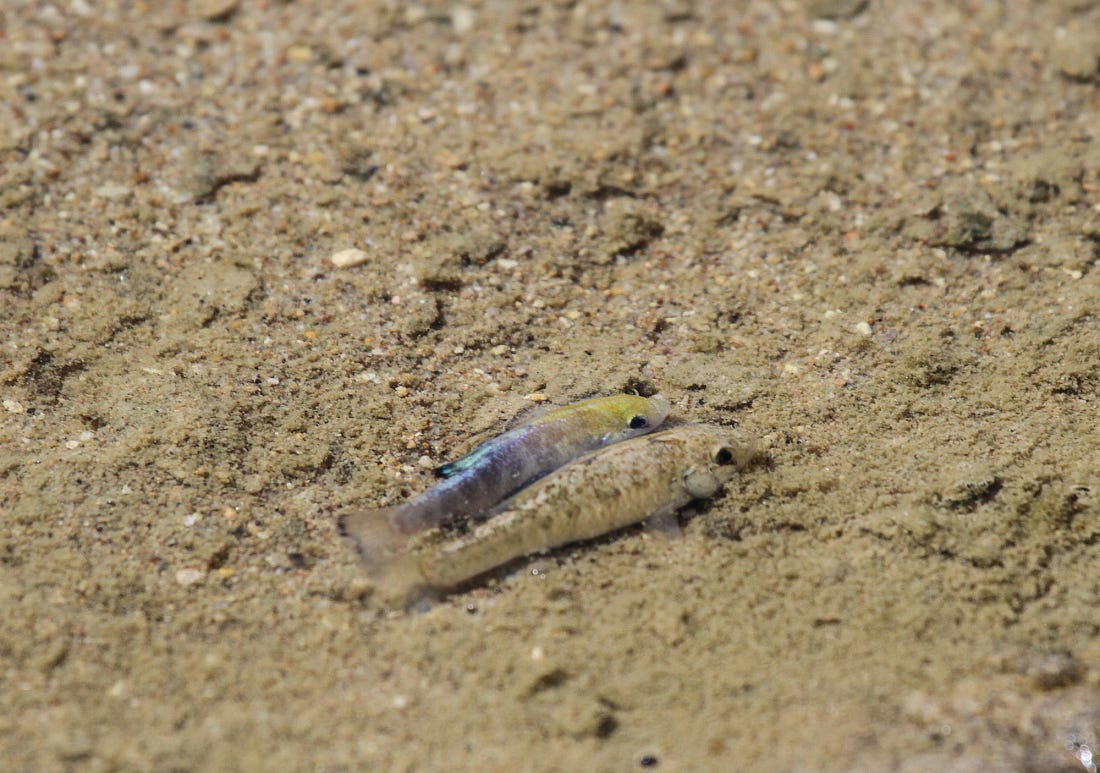
I had set up camp at Death Valley’s Furnace Creek under a creosote bush. I cooked green beans, mashed avocados, made cheese and bread sandwiches, fried spinach, sautéed gulf shrimp, and watched the sun set. By then, I had the most rudimentary working knowledge of a travel stove, and I learned to carry several days’ worth of food in tightly wrapped plastic. Nobody told me you couldn’t carry your kitchen into the desert. I had cold ice and I had lots of water. When you have everything you need, and you get a good night’s sleep, everything that follows can be pure joy. Pure wonder, and that is what happened the next day, when I pulled off the main road through Death Valley into the Salt Creek trail parking lot. The trail followed Salt Creek, a trickle of water barely an inch deep. It doesn’t take long until you notice them. The tiny little fish that somehow flourish in this inch of water. Little saltwater fish in the desert. The males are adorned with vibrant blue and yellow backs. They swim around the creek, almost joyously. Courting females, feeding, playing. They move around with a dog-like curiosity. That is what earned them their name.
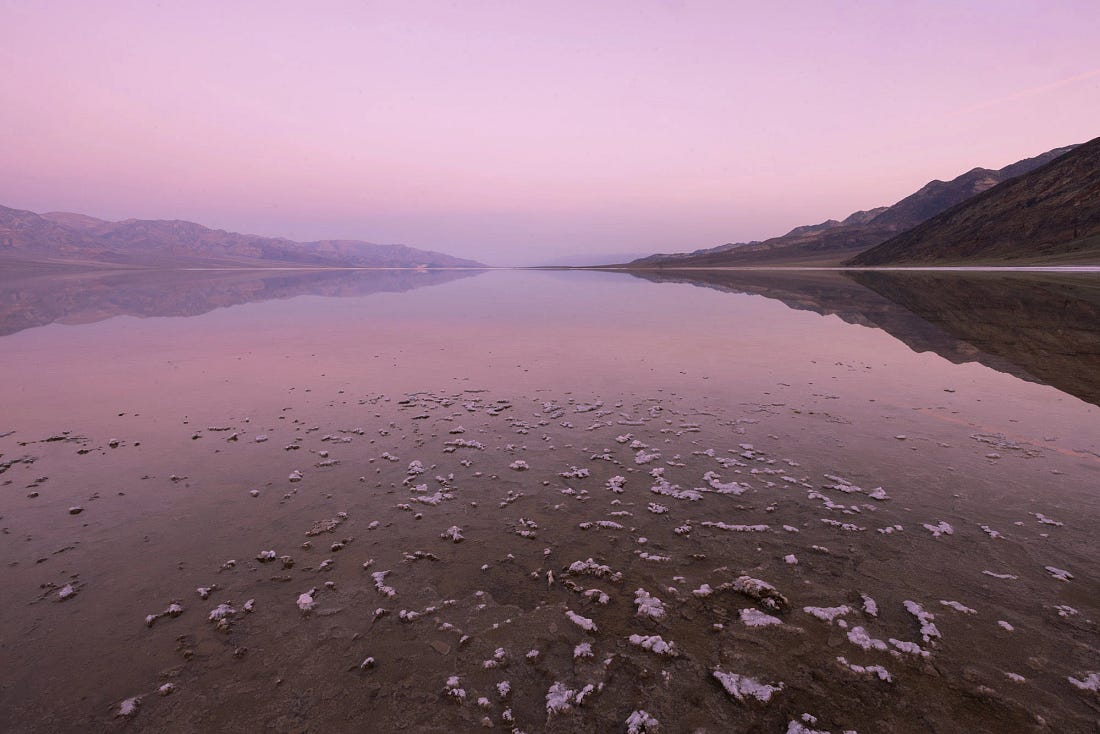
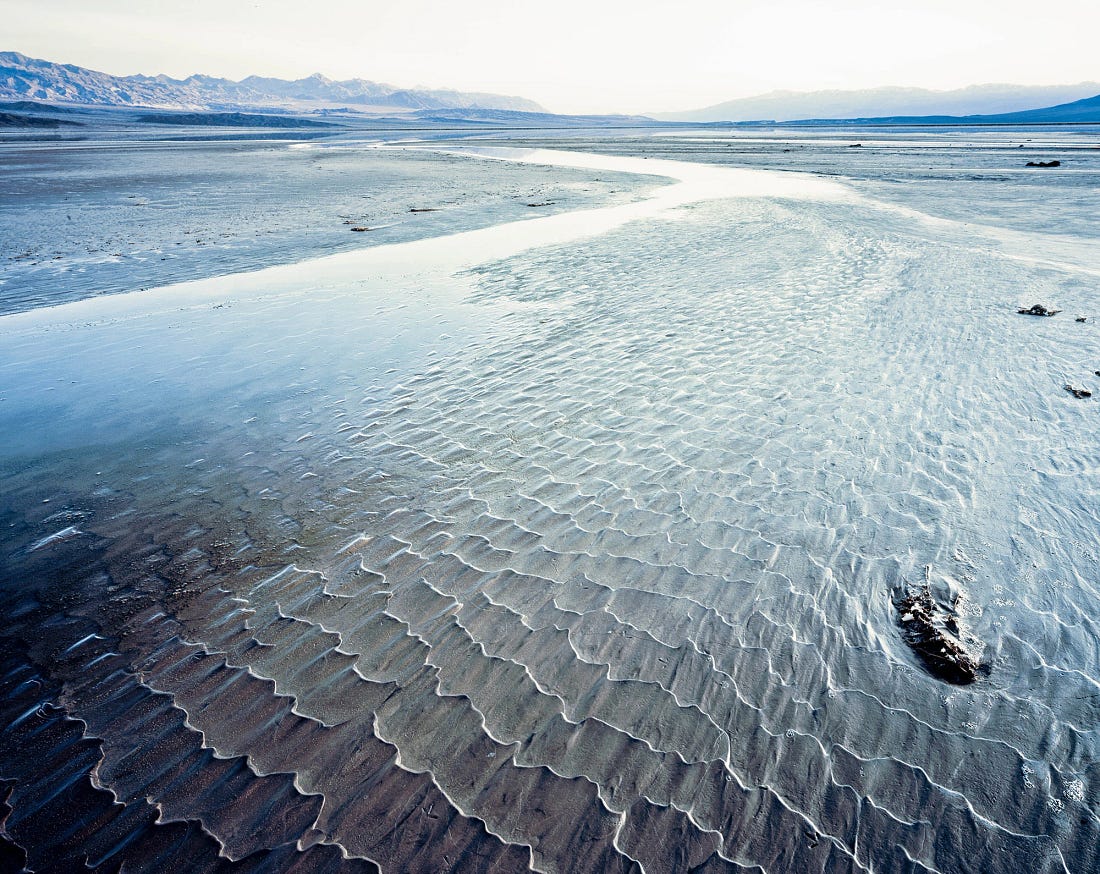
There are hundreds. Thousands of pupfish. The temperature of Salt Creek couldn’t be less than ninety-five degrees Fahrenheit. Probably more. But these tiny creatures have survived the centuries in inches of steaming water. Stovepipe WellsIt’s 2026, and it’s been 28 years since I saw my first Salt Creek Pupfish, Cyprinodon salinus salinus, a distinct population of the Death Valley Pupfish. I’ve been back several times since then, although I always make a point to see those pupfish. In those 28 years, I’ve managed to see other pupfish too, scattered across the deserts of the southwest and into Mexico. The little Salt Creek Pupfish even convinced me to track down their equivalent in the Bahamas, Cyprinodon variegatus, living in sunburned tidal pools along the edges of mangrove forests. But maybe more than seeing the pupfish, I’ve been able to see their last stands, seeing not them, but where they are supposed to be. Now I’m holed up at the Stovepipe Wells Motel, and I realize there will be no pupfish for me. The storms came hard this winter. The valley flooded, Salt Creek tore through its banks, and the boardwalk was ripped apart. Rangers shut down access to the creek. Stovepipe Wells is a motel, a gas station, and an RV park. More remote than Furnace Creek, more exposed. They were working on the water pipes — the ones that feed the rooms and the restaurant — and at some point someone opened the system to the air.
The water down there is old. Aquifer water, sealed away from the surface for thousands of years, maybe longer. It belongs to the same buried system that eventually reaches the springs — those thin corridors, surprisingly fragile, where life finds a way to hold on. But once the pipes were opened, the whole pipe network had been exposed. Air, bacteria, backflow. They shut the water down. Without water, the tourists left. Now it’s just the bar. And me, and the locals. I opt for a quiet, dark table in the bar. There is no food being served, no water, and no bar drinks unless they can be served without using the tap. Every other table is empty. Sable, the bartender, knows her IPAs. “This one is like a pine tree dragged through a giant grapefruit. You’ll like it.” She has worked here for three seasons. “Seasons?” I ask. “Oh, no, I can’t be here in the summer. The heat is horrible. I go places.” I prod, considering how remote this place is. “So, in a place like this, board is free. I have no expenses. I can do whatever I want. I woke up this morning and there was a Kit Fox out my window. The nature, the wildlife, I mean you can’t beat it.” The first customer rolls in. Scott is the maintenance guy from Furnace Creek. He’s helping out with the pipe issue. He’s muscular, clean-cropped, and just something a little sad in his eyes, and he can finish a Coors fast. Sisters Kathy and Denise, from Redding, come in next. They’ve been staying across the street at the RV camp. I had met them the day before, sitting out on their lawn chairs in their Class C. They are reminiscing about the burgers that they were used to ordering. Jesse pulls up to the bar next. He is sitting two stools down when the sisters ask him what he does out here. He orders his beer and says he runs a claim out past the Grapevine Mountains. He’s been working it for years now, and then he starts listing things: bentonite, gypsum, a little talc, borates, some perlite, zeolites, and barite veins. He says it the way someone might list groceries, like these were ordinary things to pull out of the ground. Then he keeps going: manganese oxides, traces of malachite, diatomite. Eli finds a seat at the bar. He works nights out near Amargosa Valley, but before his shift he drives. Long loops through the basin, out along the empty roads. He orders one beer, sips it slowly. He rolled into Stovepipe Wells the same way I did. On the dirt road through Crystal and the Ash Meadows National Wildlife Refuge. Flats of water still inundated the low valley. I crossed over limestone ridges at the edge of the Amargosa Valley, and as I descended toward Ash Meadows, I saw it—the place I had been thinking about for 28 years. The place where the pupfish wars began. While it sits within the Ash Meadows refuge, Devil’s Hole is actually a separate unit of Death Valley National Park, and it’s tiny—just 0.06 square miles. It is a tangle of fortified metal, gates, and chains, something out of an American Ninja or Dolph Lundgren set. It’s called Devils Hole, though “hole” doesn’t really cover it. It’s a window in the desert floor, a break in the limestone. You stand at the edge and look down, and it keeps going—down into the earth. Divers have tried to find the bottom. They’ve made it to a depth of 436 feet. The bottom has never been found. Sheer walls and blackness. The water isn’t still. Earthquakes on the other side of the world—Japan, Chile, Alaska—send pulses through the cavern. The surface rises and falls, a slow sloshing—a seiche. Every distant rupture is felt here. Near the surface, just inside that opening, there’s a ledge—a shallow limestone shelf lit by the sun for part of the day. Algae grows there. Not much. Just enough. That shelf is the entire world of the Devil’s Hole Pupfish, Cyprinodon diabolis. Not most of their world. All of it. Some years, fewer than a hundred fish remained alive. Part II on Thursday: The War Notes from the Road is free today. But if you enjoyed this post, you can tell Notes from the Road that their writing is valuable by pledging a future subscription. You won't be charged unless they enable payments.
|
Thursday, April 2, 2026
The Pupfish Wars of Death Valley





Subscribe to:
Comments (Atom)